

Riding Your E-Bike in the Rain: Wet-Weather Safety, Traction, and Post-Ride Care
Texas fall and spring weather can change quickly. A clear morning in McKinney, Frisco, Rockwall, or Plano can turn into a hard downpour, gusty thunderstorm, or flooded-road situation before you reach your destination. That does not mean every rainy day is off-limits for e-bike riding, but it does mean you need to adjust your route, speed, equipment, and post-ride routine.
Light to moderate rain is usually manageable for a properly designed electric bicycle. Thunderstorms, lightning, hail, strong winds, and standing water are different. When conditions become severe, the safest choice is to stop riding and seek shelter.
Check the weather before you leave
Before heading out, check both the radar and the hourly forecast. In North Texas, a storm cell can move across your route even when the weather looks calm at home.
Pay attention to:
- Thunderstorm and lightning alerts
- Flash-flood warnings
- Wind gusts
- Hail
- Temperature changes
- The timing and direction of approaching rain
If your route includes creek crossings, low-water areas, underpasses, or roads that regularly collect water, plan an alternate route. Never assume a familiar trail or street is safe simply because you have ridden it before. Water levels can rise quickly during Texas storms.
A rain jacket, waterproof pants, gloves, and eye protection can make a major difference, but clothing cannot make dangerous weather safe. If you see lightning or the forecast calls for severe storms, postpone the ride.
Wet pavement changes your traction
Rain reduces the grip between your tires and the road. Oil residue, leaves, dust, and road debris can rise to the surface during the first part of a shower, making pavement especially slick.
Before riding, check that your tires have usable tread and are inflated within the manufacturer’s recommended range. Some riders reduce tire pressure slightly in wet conditions to create a larger contact patch, but avoid making a dramatic adjustment or riding on underinflated tires. The correct pressure depends on the tire size, rider weight, cargo, and bike design.
While riding:
- Slow down before entering a wet corner.
- Brake earlier and more gently than you would on dry pavement.
- Increase your following distance.
- Keep acceleration smooth.
- Corner with less lean and less sudden steering.
- Avoid abrupt throttle inputs or high assist levels while turning.
Painted road lines, crosswalk markings, metal grates, manhole covers, bridge joints, and steel plates can become very slippery when wet. Cross these surfaces as upright and straight as possible. Avoid braking or turning while directly on top of them.
Also watch for wet leaves, mud, loose gravel, and puddles with a rainbow-colored sheen. That sheen may indicate oil, which can be especially hazardous for two-wheel riders.
Know what water resistance really means
Many e-bikes are designed to handle ordinary rain, but “water-resistant” does not mean “waterproof.” Your bike’s IP rating can help explain how well its electrical components resist dust and water.
In simple terms:
- The first number refers to protection from solid particles such as dust.
- The second number refers to water resistance.
- An “X” means that portion of the rating was not specified or tested.
For example, an IPX4 rating generally indicates protection from water splashing from different directions. A higher water-resistance number may provide greater protection against stronger spray. However, no rating should be treated as permission to submerge the bike.
Check the manufacturer’s specifications for the complete bike and its individual electrical components. A rating may apply to the motor or display but not necessarily to every connector, charging port, accessory, or battery interface. Warranty coverage also varies. Water damage, corrosion, pressure-washer damage, or submersion may be excluded even when normal rain riding is allowed.
Do not ride through water deep enough to reach the motor, battery compartment, controller, or electrical connectors. If you cannot judge the depth, walk away from the water and choose another route. Do not use a pressure washer after a wet ride; high-pressure spray can force water past seals and into bearings or electrical connections.
Hub motors versus mid-drive motors in wet conditions
Both hub-drive and mid-drive e-bikes can be suitable for normal wet-weather riding when properly designed and maintained. Neither motor type is automatically waterproof or immune to water damage.
A hub motor is enclosed in the wheel area, where it may receive spray from the road. A mid-drive motor is mounted near the crank and may encounter splash from puddles, mud, and trail debris. The quality of the seals, cable routing, battery enclosure, and connectors matters more than the motor layout alone.
When comparing bikes, ask about the manufacturer’s water-resistance guidance and inspect how exposed the electrical connections are. That is one reason an in-person evaluation is valuable.

Make yourself visible in the rain
Rain reduces visibility for everyone. Drivers may have wet windshields, fogged windows, glare from headlights, and reduced stopping distance. A rider who is visible in dry weather may be much harder to see during a downpour.
Use your front and rear lights whenever you ride in rain, including during the daytime. Wear high-visibility or reflective clothing, and consider reflective ankle bands or accessories that create movement cues for drivers. A mirror can help you monitor traffic without repeatedly turning your head.
Texas safety guidance recommends following traffic rules, wearing a helmet, riding in the same direction as traffic, stopping at signs and red lights, and using hand signals. The TxDOT electric bicycle safety guide is a useful reference for riders and families.
If visibility becomes poor enough that you cannot clearly see the road surface, cars, or intersections ahead, stop riding. Being seen is important, but seeing your path is just as important.
What to do after a wet ride
Post-ride care helps prevent rust, corrosion, and electrical problems.
First, turn the e-bike off and park it in a dry, ventilated area. Wipe moisture from the frame, fork, wheels, motor housing, display, controls, and exposed hardware. If the bike has a removable battery, allow the exterior of the bike and battery to dry before removing it. Once removed, dry the battery and its connection area separately.
Do not connect the charger until the battery, charging port, and surrounding area are completely dry. Charging while moisture is present can damage electrical connections and create a safety risk.
Next, focus on the drivetrain. Use a clean cloth to dry the chain, chainring, cassette, derailleur, and other exposed metal parts. After the chain is dry, apply an appropriate bicycle chain lubricant and wipe away excess. Too much lubricant can attract grit.
Avoid storing a wet e-bike under a cover where moisture becomes trapped. Let the bike breathe until it is fully dry.

If the bike was splashed heavily, fell over in water, or was partially submerged, do not immediately power it back on. Remove the battery only after the exterior is dry, and have a qualified e-bike technician inspect the motor connections, battery contacts, controller, display, charging port, wiring, and drivetrain before your next ride.
Test wet-weather handling before you buy
The right e-bike should feel stable and predictable for the way you plan to ride. A specification sheet cannot tell you how a particular frame, tire, motor, brake setup, or riding position feels on wet pavement.
When researching the best electric bikes in North Texas, include wet-weather handling in your test ride questions. Can you comfortably slow down without grabbing the brakes? Does the bike feel balanced at low speed? Are the tires appropriate for your typical roads and trails? Can you reach the controls easily while wearing gloves?
If you have searched for where to test ride an e-bike near me, Cyclone Electric Bikes offers personalized rides guided by Chris. Located just 1.5 miles from the North East Texas Trail in McKinney, Cyclone serves riders from McKinney, Frisco, Rockwall, Prosper, Allen, Plano, Little Elm, Royse City, Fate, Caddo Mills, and surrounding communities.
Chris uses live Sena helmet communication during guided test rides, allowing you to discuss comfort, handling, motor response, and riding position while moving across varied surfaces. You can ask how a bike may behave on pavement, gravel, gentle slopes, and the types of roads you actually use.
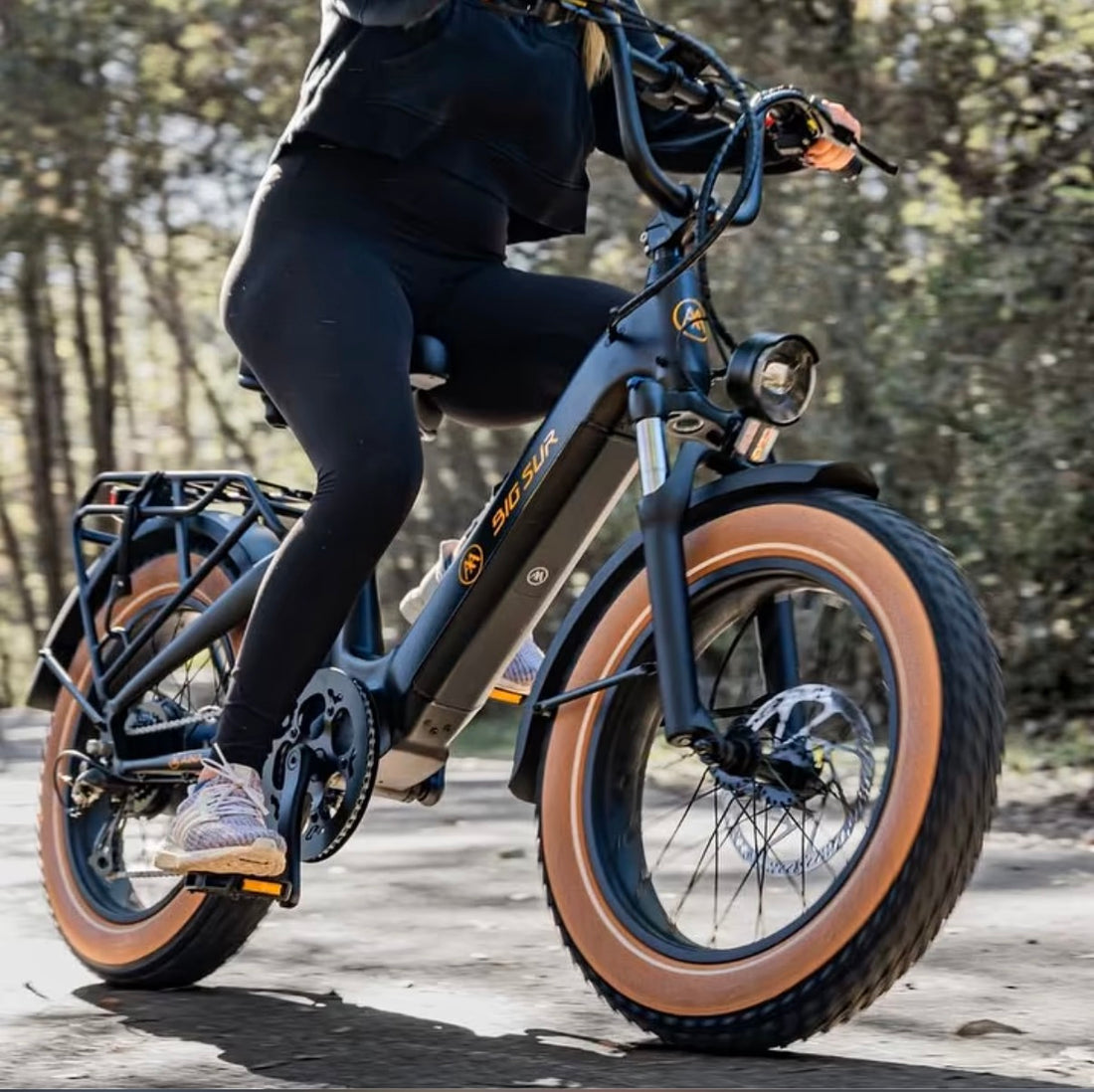
Whether you are comparing commuter, cruiser, touring, fat-tire, cargo, folding, mountain, or all-road styles, real-world testing can make the buying decision much easier. It is also a practical part of understanding how to choose the right electric bike for commuting in changing Texas weather.
Cyclone service for wet-weather concerns
Cyclone is an e-bike specialist shop focused on pedal-assist electric bicycles. We do not sell or service e-motos or electric motorcycles.
Our service department performs many e-bike repairs while you wait, with no advance appointment required in most cases. We can inspect a bike after a wet-weather incident, check for corrosion or water intrusion, and address mechanical or electrical concerns. Cyclone also services online-purchased e-bikes when the manufacturer supplies the necessary proprietary parts.
If you are looking for an electric bike store in McKinney TX, visit Cyclone for product guidance, accessories, personalized test rides, and service support from a team that understands how local riders use their bikes.
A note for families riding with children
Texas law prohibits anyone under 15 from operating a Class 3 e-bike. A child under 15 may ride as a passenger only when the e-bike is designed to carry more than one person. Local cities and trail systems may add helmet, age, speed, or access requirements, so check posted rules before riding with children.
The practical family rule is simple: every child should wear a properly fitted helmet, ride at a controlled speed, and use an e-bike appropriate for their age, size, and experience. Review current local guidance, such as the City of Celina’s e-bike information, before using municipal streets or trails.
Rain riding can be enjoyable when conditions are reasonable and preparation is part of the plan. Slow down, avoid dangerous water and severe storms, stay visible, dry the bike carefully afterward, and have questionable electrical components inspected before riding again.
